| |
| |
Safeguard from service disruptions with load balancing, automatic failover, geographic routing, and active health checks against your origin servers. | | |
What is Load Balancing?
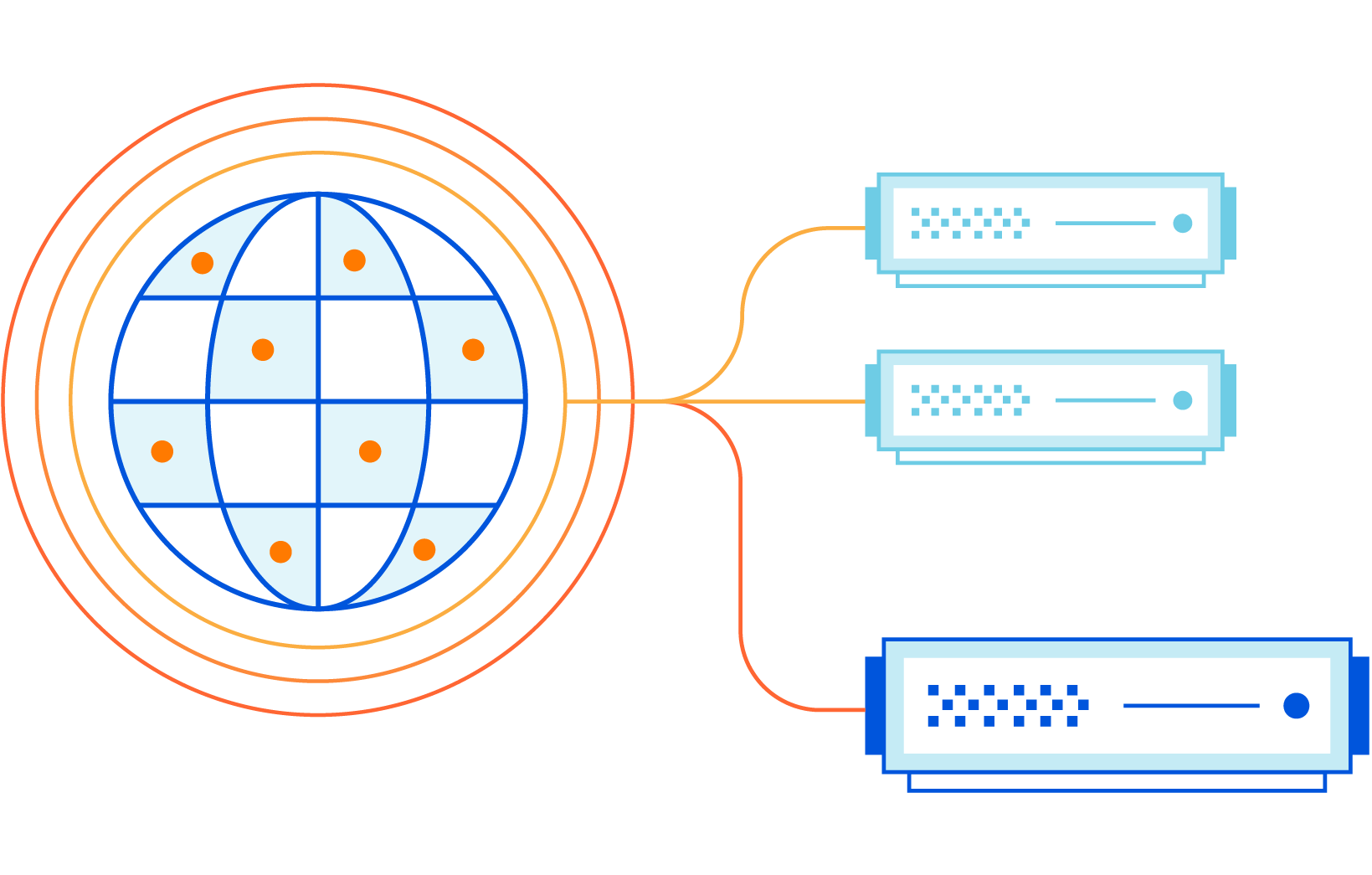
Load balancing is the process of distributing traffic among multiple servers to improve a service or application's performance and reliability with your existing infrastructure resources. This reduces the strain on each server and makes the servers more efficient, speeding up performance and reducing latency. | | |
Why Load Balancing?
Imagine a checkout line at a grocery store with 8 checkout lines, only one of which is open. All customers must get into the same line, and therefore it takes a long time for a customer to finish paying for their groceries.
Now imagine that the store instead opens all 8 checkout lines. In this case, the wait time for customers is about 8 times shorter.
Load balancing essentially accomplishes the same thing. By dividing user requests among multiple servers, user wait time is vastly cut down. This results in a better user experience — the grocery store customers in the example above would probably look for a more efficient grocery store if they always experienced long wait times. | | |
"The combination of Load Balancing's geolocation steering and Cloudflare's caching makes sure customers are getting the fastest load times possible."
Nigel Hepworth
Managing Director at Active Solutions
| | |
Try Load Balancing To Maximize Performance and Availability | | |
| |
| |





No comments: